
Printing on Corona Treated Surfaces:
A Technical Overview
Commodity thermoplastics are used virtually everywhere. There are dozens of options serving a variety of functions depending on the performance requirements of the application. Two common commodity thermoplastics are polypropylene (PP) and polyethylene (PE). These materials are highly versatile, good for electrical insulation applications, packaging, medical equipment, and even aerospace, but one of their key strengths is chemical and moisture resistance.
These materials exhibit very low surface energy – typically an attractive attribute, but is that always desirable? Does low surface energy affect adhesion? How does the surface energy impact adhesives and ink application for assemblies and labeling? In general, low surface energy makes the material harder to bond with. For printing and bonding applications, the surface energy of the polymer must increase.
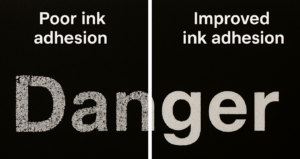
Corona treatment is a widely used surface modification technique that enhances the adhesion properties of polymer substrates. It is commonly applied to polyolefin materials such as polyethylene, polypropylene, and other non-polar plastics that inherently exhibit low surface energy. This article explores the technical aspects of printing on corona-treated surfaces, including the science behind the treatment, its impact on print quality, and best practices for achieving optimal results.
What is Corona Treatment?
Corona treatment involves exposing a polymer surface to a high-voltage electrical discharge. This process creates a corona—a plasma region—around the electrode, which oxidizes the surface of the material. The oxidation introduces polar functional groups, increasing the surface energy and improving wettability.
Key Effects of Corona Treatment:
• Increased Surface Energy: Untreated polyolefins typically have surface energies around 30 dynes/cm, while corona treatment can raise this to 38–50 dynes/cm.
• Creates Chemical Bonding Sites: The oxidation process during corona discharge adds reactive sites to the polymer surface. These sites enable stronger chemical interactions between ink components and the substrate.
• Improved Ink Adhesion: Higher surface energy allows inks and coatings to spread and bond effectively.
• Enables Compatibility with Various Inks: Treated surfaces can accept solvent-based, UV-curable, and water-based inks, expanding printing options.
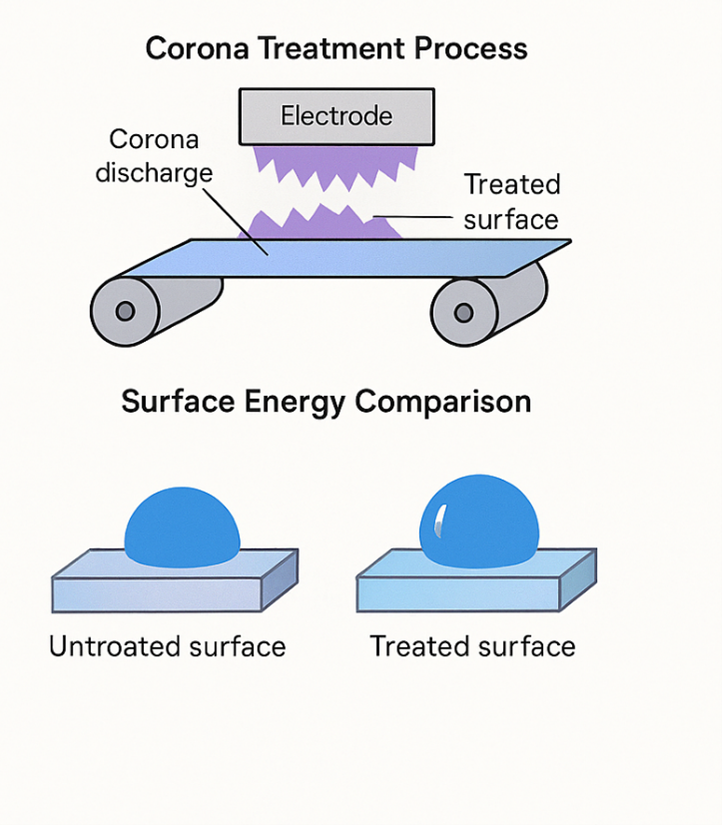
Printing on untreated surfaces often results in poor ink adhesion, smearing, or complete delamination. Corona treatment mitigates these issues by creating a receptive surface for inks and coatings.
Does Corona Treatment Last Forever?
Corona treatment does not last indefinitely. While it initially raises the polymer’s surface energy by introducing polar functional groups, this effect diminishes over time. The treated surface undergoes molecular reorientation, contamination from the environment, and aging effects, all of which reduce surface energy. This decay can start within days, so printing or coating should ideally occur soon after treatment for optimal adhesion. In general, the treatment material should be used within a few months of treatment.
Conclusion
Corona treatment is a critical step in enabling high-quality printing on low-energy polymer surfaces. By understanding the science behind the process and adhering to best practices, manufacturers can achieve durable, vibrant prints that meet industry standards.
The Gund Company manufactures PolyPro FR®, a flame-retardant polypropylene, and provides other PP and PE materials. These polyolefin materials can be corona-treated to maximize bonding of inks, coatings, and adhesives. Additionally, The Gund Company can print and laminate these materials to ensure customers receive a reliable, high-quality product.
Ready to dive deeper?
Get the full white paper and explore insulation materials tailored to your application.
Choose an option below to gain access to our technical library or connect with a material expert today!